
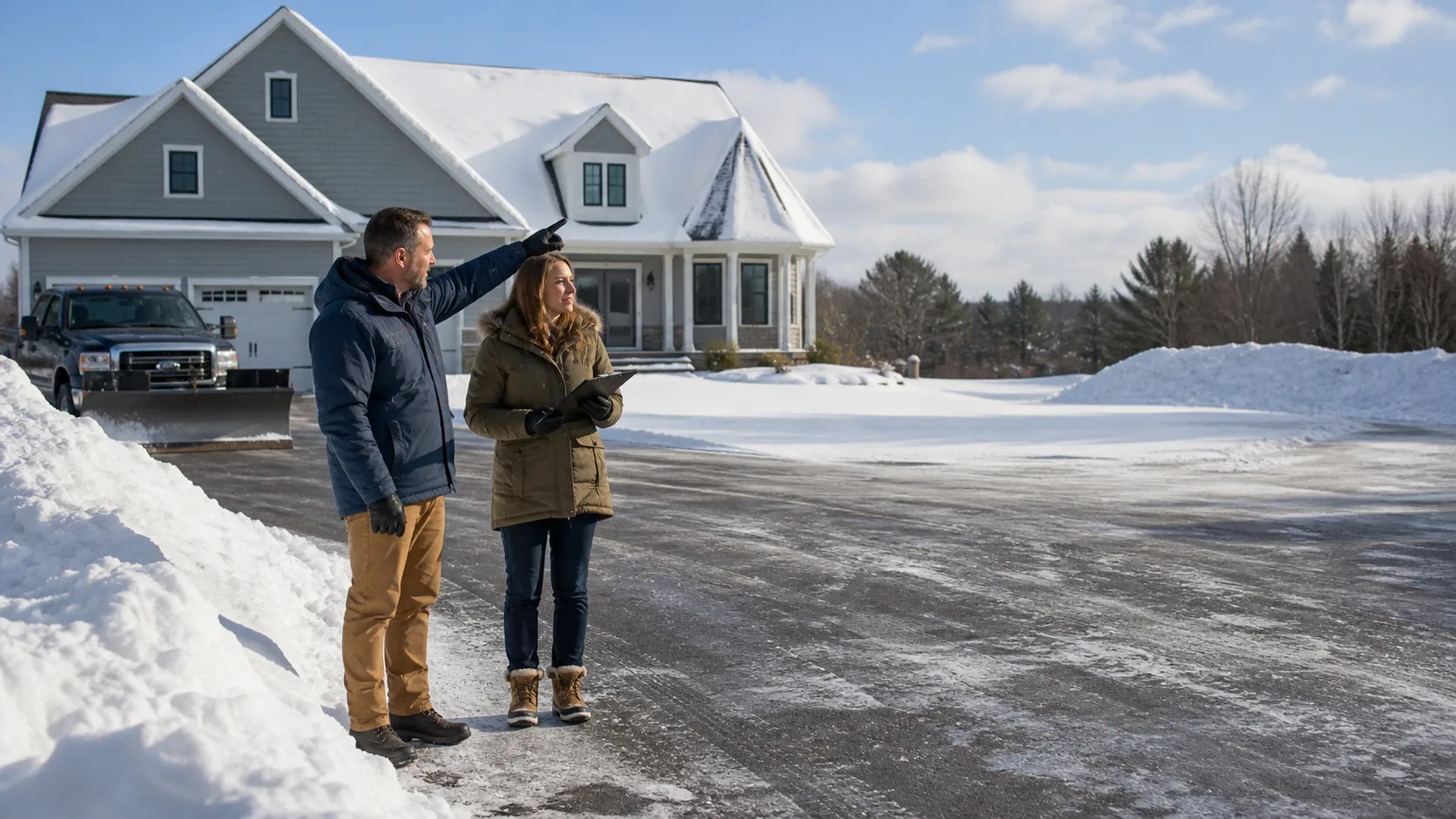
Snow storage deserves a place in the homebuilding conversation long before the first major snowfall reaches Western New York. When snow has nowhere practical to go, it can crowd driveways, cover sidewalks, block sightlines, and create trouble as it melts. As home builders in WNY, we plan for winter conditions as part of a comfortable, polished homesite.
Lake-effect snow, changing temperatures, and repeated freeze-thaw periods all affect how a property performs through the colder months. While touring lots in autumn or planning a custom home, you can look beyond the floor plan and ask how the site will handle snow, plowing, and melting water.
Winter-Ready Homesites Start with Smart Planning
A snow pile does not disappear when a driveway is plowed. It stays on the property, often growing taller and denser after repeated storms. That is why we consider where snow can collect without interfering with daily life.
A winter-ready plan helps protect the parts of your home you use every day, including the garage, front entry, sidewalk, mailbox, and guest parking areas. It also helps keep compacted snow away from spots where melting water could gather near the home.
When we evaluate a homesite, we look at the lot’s layout and how the home will sit within it. The goal is to leave practical room for snow removal while preserving a clean, welcoming exterior.
Key areas to consider include:
- Space beside or beyond the driveway for plowed snow
- Clear paths to the front door, garage, and sidewalk
- Visibility for vehicles entering and leaving the property
- Drainage routes that remain open during winter thaws
- Room around mailboxes, visitor spaces, and street access
Thoughtful snow planning is one of those behind-the-scenes details that supports a lower-maintenance luxury home experience. It may not be the first thing you notice on a sunny lot tour, but it can make a real difference after a heavy Buffalo snowfall.
Grading Guides Snowmelt Away From the Home
Good snow storage begins with the ground beneath it. We review natural slopes, drainage patterns, and finished elevations so water from melting snow has a planned route away from the foundation.
During a late-winter thaw, packed snow can release a large amount of water over a short period. If that water settles near the home, it may create standing water, icy areas, or moisture concerns around lower-level windows, patios, garage doors, and entryways. A carefully graded homesite helps direct water where it should go.
Site planning often considers several connected details:
- The height and placement of the foundation
- Garage location and driveway slope
- Swales and drainage paths across the lot
- Landscape areas that can receive runoff
- The relationship between patios, walkways, and lower-level openings
Rather than treating grading as a separate task, we coordinate it with the home design and lot conditions. A driveway that works well for vehicles should also work with the site’s drainage plan. Likewise, the finished elevation of the home should support practical water movement during rain, snowmelt, and freeze-thaw cycles.
This planning helps reduce the chance that water will linger where you least want it. It also supports safer outdoor surfaces when temperatures shift quickly from mild afternoons to freezing evenings.
Driveways and Walkways Need Winter Breathing Room
Driveway layout has a major effect on snow removal. A narrow area with limited side space can leave plows and shovels with few choices for where to place snow. By contrast, a well-planned drive gives removal crews room to work while keeping access open.
We think about how you will use the property in real winter conditions, not just on move-in day. You should be able to pull into the garage, welcome visitors, receive deliveries, and walk to the front door without squeezing around a growing snowbank.
Snow piles need to stay clear of areas that affect safety and convenience, such as:
- Sightlines when backing out of the driveway
- Walking paths between the driveway and front entry
- Mailboxes and curbside access
- Street edges and guest parking areas
- Decorative edging, turf, and planting beds
Turnaround areas, paving boundaries, and usable side-yard space can all influence how easily snow can be managed. These details also help protect exterior features from plow blades and heavy piles. Without a clear plan, snow removal equipment may push snow into lawns, shrubs, lights, or hardscape features that are difficult to see beneath fresh snow.
A polished arrival experience should not disappear after the first storm. By planning for winter access early, we can help keep the approach to your home functional and welcoming throughout the season.
Landscaping Can Create Intentional Snow Zones
Outdoor design should look good in every season, but it also needs to stand up to winter use. We can help identify areas where snow is likely to be pushed or stacked, then factor those spaces into the broader landscape plan.
Lawn areas and durable planting zones are often better suited for snow storage than delicate garden beds or decorative features. Snow piles can bring extra moisture, road salt, and physical weight, all of which can be hard on certain plants and materials.
It is wise to keep commonly used snow-storage areas away from:
- Delicate shrubs and young ornamental trees
- Low landscape lighting and irrigation components
- Decorative walls, edging, and outdoor furnishings
- Front-entry plantings and high-visibility garden beds
- Patio spaces and routes to outdoor living areas
A custom home does not have to choose between beauty and practicality. Snow-storage zones can feel like a natural part of the property when they are planned alongside lawns, gardens, walkways, and exterior features. That approach can also help limit spring repairs caused by plows, salt, or the weight of melting snow.
Community Planning and Early Questions Matter
Winter comfort extends beyond the individual lot. In communities such as Spaulding Green, road layouts, shared green spaces, visitor parking, and the placement of neighboring homes can all shape snow removal, drainage, and daily access. We consider how each homesite relates to the surrounding streetscape so there is room for plowing, snow placement, and safe sightlines.
Before choosing a lot or finalizing a design, we recommend asking about grading plans, drainage routes, driveway layout, landscape zones, and snow-removal access. It is also helpful to understand which shared areas may be maintained by an HOA and whether community guidelines address parking, plowing, and winter property care.
The best time to think about snow storage is before the ground is covered. A home and homesite planned for all four seasons can help you enjoy clearer access, better drainage, and a more comfortable outdoor experience when Western New York winter arrives.
Build With Year-Round Comfort in Mind
At Designer Homes of WNY, we help homeowners make informed choices for every season. See where our home builders in WNY can bring your vision to life. Ready to discuss your new home? Contact us to start the conversation.